The Champions League That Wasn't Clean
The Context
Between 2016 and 2018, Real Madrid won three consecutive Champions Leagues - a historic feat. Ronaldo was the media protagonist of that sequence, accumulating goals, records and "Mr. Champions" narratives. The problem is what lay underneath: a series of serious refereeing decisions in decisive games that systematically benefited Real Madrid in moments when they could have been eliminated.
Those "survivals" became trophies. Those trophies became Ballon d'Ors.
Final 2016: The Opening Goal That Was Illegal
In the 2016 Champions League final, Sergio Ramos opens the scoring early. Atletico de Madrid equalise. Real win in extra time 4-1.
What few know: in 2020, the final referee, Mark Clattenburg, publicly admitted that Ramos's goal was offside. His words:
"The goal was slightly offside, and we realised at half-time."
The first major European title of the Real/Ronaldo era is literally built on an incident the referee himself acknowledges as irregular. Ronaldo scores from a penalty already in extra time, with the game decided - and enters the record books as European champion. Source:
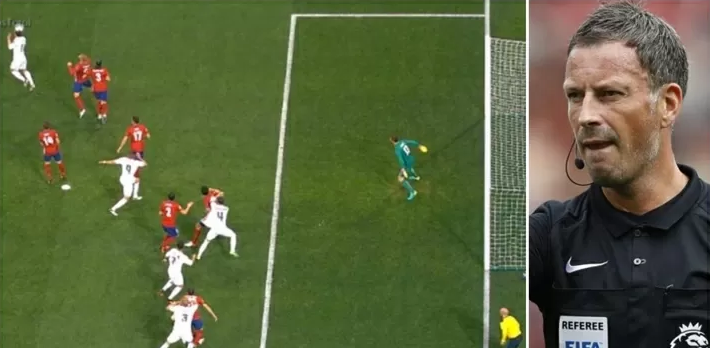
Clattenburg on 2016 Real Madrid-Atletico final
AS USA video article with the referee's admission and the offside context.
Open article ↗What This Means for Ronaldo's Trophy Haul
Putting the four cases together:
- 2016: opening goal of the final in offside, admitted by the referee.
- 2017: Bayern eliminated with an unjust red card and Ronaldo goals in offside.
- 2018 (PSG): dubious penalty and a goal technically illegal under the laws of the game.
- 2018 (Juventus): 93rd-minute penalty that shocked half the world.
In a scenario with VAR and consistent refereeing, Real could credibly and justifiably have won one or two fewer Champions Leagues in this cycle. Ronaldo's knockout-round goals - the basis of his European records - include at least three or four incidents that should not have counted.
Those goals and those trophies were subsequently used, directly, as the central argument in the 2016 and 2017 Ballon d'Ors. UEFA, France Football and the mainstream press justified both awards with "won the Champions League, scored in big games, was decisive in the knockouts". The Athletic, through Michael Cox, even proposed alternative winners precisely because the weight given to the Champions League distorted the assessment of real individual performance.